Performance 1:
Nirvana – “Lithium” (Live at Reading 1992)
Nirvana perform a grunge song which is an intimate but raging performance, which includes the audience singing along and moshing. Majority of the audience members range from teenagers to early 20’s which is ideal because they are willing to back the energy they are receiving from the performers. Also Nirvana songs are all written in the field of alienation, anger and heartbreak which is a common theme young people deal with on a daily basis.
Artist Bio:
Nirvana was an American rock band formed in 1987. They help establish the grunge scene coming out of Seattle in the late 80s and found commercial success in the early 90s.
Genre Bio:
Grunge is a sun genre with blending of alternative rock and heavy metal. The subculture that arrived in the mid-1980s was born in Seattle, Washington as an underground scene created by the youth who were felt understood and the underdogs of society. The lyrical themes consisted of teenage angst, introspection and social alienation.
Visual Aesthetic:
The crowd takes this performance to another level by participation because everybody is engaged which make me as a viewer feel like they are performing too.
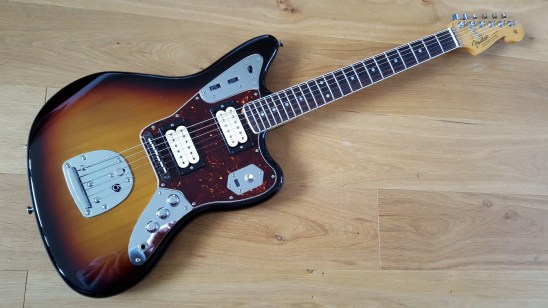
This is the guitar Kurt used for his performance which had distortion and chorus on the pedalboard which gives it a clean but ruff sound.
Performance 2:
Blood Orange – “Nappy Wonder” (Live at Pitchfork Music Festival 2018)
The Band perform an R&B song with Neo-soul influences. The audience watching will be people from different backgrounds and nationalities because the festival have artists from a multitude of genres performing at the same stage
Performance 3:
Depeche Mode – “Behind the Wheel” (Live
Artist Bio:
Depeche Mode are a Synth pop band from Basildon, Essex that started in 1980. They have influenced a range of artists and bands like ah-a, Lady Gaga, Nine Inch Nails, Linkin Park, The Killers and many others. The group has also shaped the sound of other genres including Detroit Techno and Indie rock.
Genre Bio:
Synth pop is a New wave sub genre that fused disco and electronic music. Familiar traits of synth pop music include the use of synthesisers, drum machines, electronic productions, and a distinguishable visual style displayed in music videos and fashion. Synth pop has been called “one of the definitive genres of the 1980s”, its was used to fill a void left by disco after being declared “dead” in 1979. This create a wave of bands like Depeche Mode, Soft Cell, New Order and many others who helped build the genre to be the prominent sound of the 80s.
Visual Aesthetic:
Performance Analysis:
From the start of the performance the audience were already engaged with anticipation, which gave the lead singer an immense confident boost.
Song Analysis:
Behind the Wheel is an electronic song with Alternative rock elements. The song has a spacey feel with reverb on the synth leads, guitars and snares.The song is written in the key of Bm and the tempo of 125BPM which make the chords seem dark and atmospheric. The reverb on the guitars that come in every 4 bars give the song a sense of mystery. The 4 on the floor drum pattern gives the song groove. During the verses only the bass and drums are heard which just gives a basic groove to dance to and then the chorus comes in with more layer including a guitar riff and a vocal sample.
Venue Analysis:
The venue in the video the band performed in has the capacity of 90,888. Only top tier commercial artists/bands perform at venue of this size. The
Basic components of a one way sound system
the cone represent the sub frequency, the mid also includes the tweeter and a cone.
The speak on cable is used to carry audio
The crossover separates the frequencies and sends them to the tops, mids and subs.
Passive speakers require an amplifier
A three way sound system includes 2 mids, 2 tops, 2 subs and a speak on cable. The top speakers require a top amplifier which is used for high frequencies. Backline are passive speakers used by the musicians on stage which include guitar and bass amplifiers
A dynamic mic is used for the kick drum
- Channel 1 – Kick drum
- Channel 2 – Snare drum
- Channel 3 – Hi Hat
- Channel 4 – High Tom
- Channel 5 – Mid Tom
- Channel 6 – Low Tom
- Channel 7 & 8 – Overheads 1 & 2
- Channel 12 – Bass mic
- Channel 13 – Guitar mic
- Channel 14 – Vocal mic
From the mixing console t
Live Sound Evaluation:
In the live room we packed up the instruments and the front of house speakers into crates, next in groups of two we wheeled down the equipment to the performance room. Once we had brought down all the equipment, we set the stage how it was presented on the sheet we were given and unpacked. Everybody was assigned a role to which I was given the job of a “backliner” so I made sure all the amplifiers were in a safe place facing the audience and to power the amplifiers I used a kettle lead, I also made sure the passive speaker powered by a speakon cable were facing the musicians. When I finished connecting all the amplifiers to their instrument I then moved on to connect the microphones to the stage box, the microphones were facing the amplifiers to send a signal to the mixing desk to have control during the live mixes. Once everything was connected all loose wires were taped to the ground as a health and safety precaution to prevent any injuries. The mixing desk was switched on last to prevent any feedback from the instruments plugged in.
During soundcheck we started with the drum kit, we got the drummer to kick the bass drum repeatedly and we turned the mids and subs up and tops down to give a round punchy sound but too much of this could cause an overload and lead to distortion which is not pleasant to the ears of the audience. We then went to the snare and confirmed the tops and mids were turned all the was up to give it a snappy sound, we went to the hi hats and did the same barely touching the subs. Next was the low tom which was the only tom at the time. Finally crash and ride which was picked up by the overheads which are condenser microphones. After each drum was tested the drummer was asked to play the full kit to see if the mix was right then we could add some slight adjustments like turning the gain down on the hi hats or add more low end to the kick.
For the bass guitar on channel 12 the subs and mids were turned up high but not too high so it did not interfere with drum mix. the bass had a nice round sound which fit together nicely with the other instruments. We turned up the gain because their was not much high frequency.
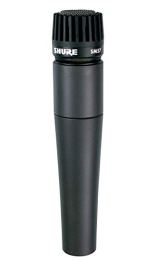
For the guitar using a Shure SM57 halfway between the edge and the cone of the amplifier. First the musician had to tune his guitar before we began mixing. As the part of Backline I made sure the gain on the amplifier was up but not too much to cause distortion.
The final two instruments for the soundcheck were two keyboards on both the tops and mids were tweaked up and a slight touch on the subs to give it them a full lush sound, after they were both mixed we got a musician to play some chords to check the sound to see if we were ready to move on to the vocals.
During the soundcheck we got the vocalist to repeat the phrase “1, 2” to check the frequency in the microphone “1” is for the bass and “2” is for the treble in the performers voice also we made sure the gain was all the way up and the vocals were panned to the middle of the mix so they do not get drowned out by the rest of the band.
The auxiliary was used to send signals to the stage box then to the monitors so that the band could hear themselves clearly without needing to hear from the front of house speakers.
A sound reinforcement consists of microphones, amplifiers, final processors and front of house speakers which are controlled by a mixing desk. The front of house speakers were facing the audience away the amplifiers so there was clarity in the sound.
During one of the performances there was 2 keyboardist, a bassist, 4 vocalist and a drummer. At first I was afraid to turn the master all the way up because I did not want to receive feedback but after Craig assured me it was safe I did then we moved on to bass guitar adding move sub to the mix so felt over the band. The Keys were the foundation of the song so we made sure that was the loudest instrument and next we made sure the tops in the microphone were not too high because the vocalist mainly consisted of rappers.
At one point one of the keyboards started give feedback in the front of house speakers because the fader on the mixing desk and the volume on the keyboard was to the max, to fix this problem one of the “backliners” had to on the stage and turn down the keyboard volume we had to move the fader to a reasonable volume.
During one the performances there was a singer so to the vocal channel fader was all the way up so you hear them over the instrumentation also reverb was applied which gave off a softer and airy tone.
Both the soundchecks and the performances went well for our first time, we all worked together as a team effectively so the work was very fluent. After I had finish my part as a Backline I then moved on to help others with their roles, so did the people who completed their tasks which helped us move faster as a team. I believe more communication among the team would have made us finish a few roles quicker and made sure we had all the right equipment so everybody would have just made one trip to the performance room. Next time I will work better as live engineer because this has given more of a hands on experience and I understand how I should approach a live mix and how to work better as a “backliner”. Overall the soundcheck and the performances were a success.
 Riff
Riff 