Sound creation & Manipulation
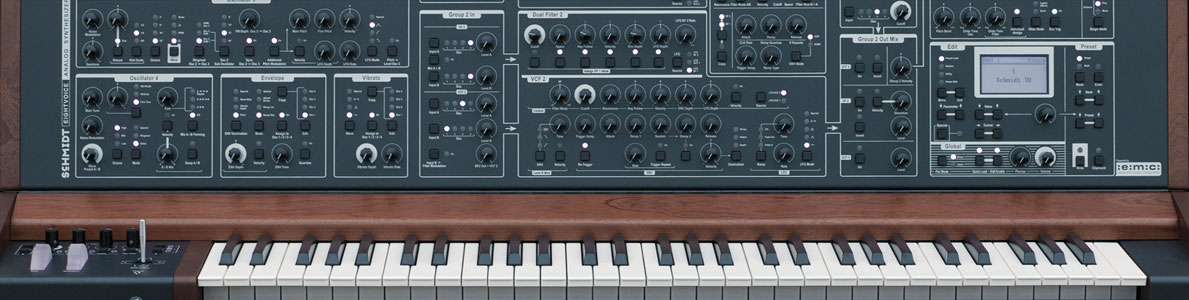
A synthesizer is an electronic instrument that creates audio signals that might be changed over to sound. Synthesizers emulate conventional musical instruments, for example, piano, woodwind, vocals, guitar or create novel electronic timbres. Analog synthesizer use low-pass filters and high-pass filter to modify the sound.
During the 1930s, the fundamental components required for the advanced analog subtractive synthesizers were electronic oscillators, envelope controllers, audio filters and numerous effects units.
In 1939 The Hammond Novachord released an electronic console that utilized twelve arrangements of best octave oscillators with octave dividers to produce sound, with vibrato, a resonator filter bank and a dynamic envelope controller. Amid the three years that Hammond made this model, 1,069 units were delivered, however this model was stopped toward the beginning of World War II.
During the 1950s, before the promotion of electronic organs and the presentations of combo organs, makers created different convenient monophonic electronic instruments with small keyboards. These little instruments comprised of an electronic oscillator, vibrato impact, and passive filters. Most were intended for traditional groups, as opposed to as experimental instruments for electronic music studios, yet added to the advancement of present day synthesizers.
Early analog synthesizers utilized technology from electronic analog computers and research center test gear. They were for the most part “modular” synthesizers, comprising of various autonomous electronic modules connect by patch cables into a patchbay.
In the early 1960’s renowned modular synthesizer constructors included Buchla and Associates, Moog Music, ARP Instruments, Inc., and Electronic Music Studios. Moog set up principles perceived worldwide for control interfacing on analog synthesizers.
The new wave period of the 1980s initially conveyed the digital synthesizer to the general public. Groups like Talking Heads and Duran Duran utilized the digitally made sounds on a portion of their most well known discography. Other pop culture groups like Hall & Oates started consolidating the digital synthesizer into their sound during the 1980s. Amid the center to late 1980s, digital synthesizers and samplers to a great extent replaced analog synthesizers. By the mid 1990s, nonetheless, musicians from the techno, rave and DJ scenes who produced electronic music however came up short on the financial plan for vast computerized frameworks made a business opportunity for the then modest second hand analog equipment. This expanded interest for analog synthesizers towards the mid-1990s, as bigger quantities of musicians step by step rediscovered the analog characteristics. Subsequently, sounds related with analog synths ended up mainstream once more.
A digital synthesizer is a synthesizer that digital signal processing (DSP) procedures to make melodic sounds. This as opposed to more seasoned analog synthesizers, which create music utilizing analog hardware, and samplers, which play back digital recordings of acoustic, electric, or electronic instruments. Some digital synthesizers imitate analog synthesizers; others incorporate inspecting ability notwithstanding advanced blend. Be that as it may, a few parts of analog synthesizers sound can be difficult to recreate digitally.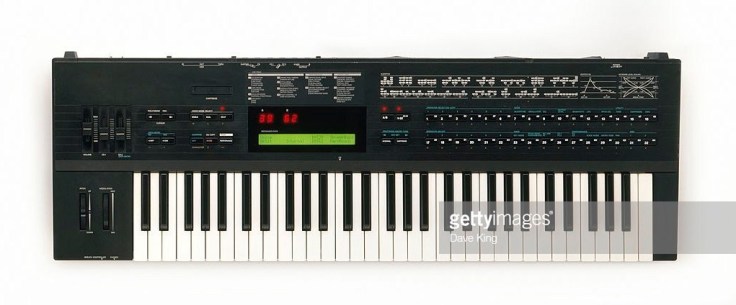
Today VSTs (Virtual Studio Technology) are audio plug-in software interface that incorporates programming synthesizers and effects in DAWs (Digital Audio Workstation). VST instruments incorporate programming reenactment emulations of well-known analog synthesizers and samplers. These normally imitate the look of the original hardware just as well as it’s sonic qualities. This gives artists and recording engineers a chance to utilise virtual renditions of devices that generally may be challenging and costly to get.
Two of Britain’s driving film composers caution that the nature of music for film and TV is enduring in light of the fact that synthesised sounds are progressively supplanting real instruments with an end goal to cut expenses. Carl Davis said “a synthesised soundtrack lacked “the heart” of symphonic or instrumental music.” Also another honoured composer Christopher Gunning commented that “The problem with some synthesised sound lay in its lack of expression”. This has been an ongoing dilemma since synthesizers hit the mainstream which has only gotten more prominent as every genre of music has adapted to the synthesised sounds.
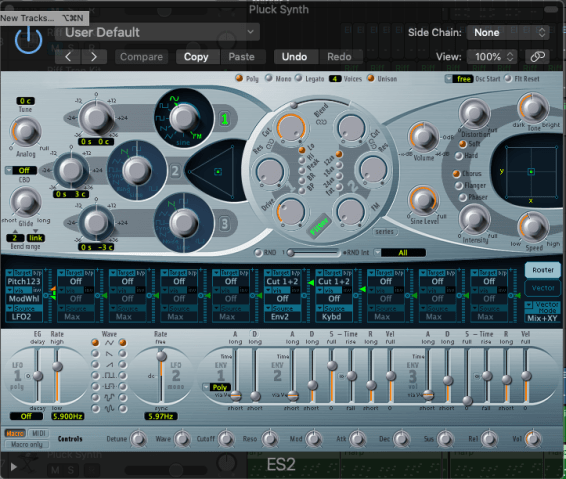
For this unit we were given the task to create a track only using the ES1 and ES2 synthesizer. We had to make a variation of sounds including a kick, snare, hi-hat, bass, pad, lead, pluck, strings and melodic patch.
For my 808 bass I applied a sine wave, turned both the cutoffs the whole distance for sub. I ensured the sustain was low off so the bass did not ring out and had the release halfway. I additionally include a slight bit of distortion and turned up the glide I could make the bass sleek.
When working on my project I started with a pluck sound first In the ES2 I used one oscillator and changed it to a sine wave, I included the unison to give it a fuller sound. I pulled down the sustain to give off a bell sound and I turned up the resonance to make the sound ring out.
Sampling is the reuse of a section of a sound recording in another recording. Samples may involve a beat, melody, discourse, or different sounds. They are normally coordinated utilising digital hardware (samplers) or programming, for example, digital audio workstations. The term sampling was authored by in the late 1970s by the manufacturers of the Fairlight CMI, a dominant early sampler that turned into a fundamental of 1980s popular music. The accomplishment of the Fairlight motivated contenders to create their very own samplers, improving the technology and driving down costs drastically. Drum machines like the Oberheim DMX and Linn LM-1 started consolidating samples of drum kits as opposed to creating sounds from circuits.
A sampler is an electronic or digital instrument comparable in certain regards to a synthesizer, yet as opposed to creating new sounds with voltage-controlled oscillators, it utilizes sound recordings of authentic instrument sounds (e.g., a piano, violin or bass), extracts from recorded pieces (e.g., a five-second low register guitar riff from a funk records) or different sounds (e.g., alarms and sea waves). These sounds are then played back by the sampler program itself, a MIDI console, sequencer or another activating device to perform or write music, since these accessed. A sample may regularly be pitch-shifted to various pitches to create melodic scales and harmonies.
Sampling is an infrastructure of hip hop music, with producers examining funk and soul records, especially drum breaks, which could then be rapped over. Performers have made albums amassed totally from samples. The method has affected all types of music and is especially critical to electronic music, hip hop and pop. During the 1960s, Jamaican dub reggae producers like, King Tubby and Lee “Scratch” Perry adopted pre-recorded samples of reggae rhythms to deliver “riddim” tracks, which were then deejayed over. In the 1970s Jamaican migrants acquainted dub sampling strategies with American hip hop music. The 1988 arrival of the first Akai MPC, a reasonable sampler with an instinctive interface, made sampling reachable to a more extensive market and impacted the advancement of electronic and hip hop music.
Sampling without consent can infringe copyright. The way toward securing authorisation for a sample is known as clearance, which can be a complicated and expensive procedure. In 1991, songwriter Gilbert O’Sullivan sued rapper Biz Markie after he sampled O’Sullivan’s “Alone Again (Naturally)”, the court decided that sampling without consent established copyright infringement. Rather than requesting royalties, Gilbert O’Sullivan constrained Biz Markie’s record label Warner Bros to retract the album until the track was expelled. Dispute emerged when Vanilla Ice sampled the bassline for his 1990 single “Ice Baby”. At first he denied the allegation and after then said he had altered it. The lawsuit culminated in Bowie and all individuals from Queen getting songwriting credits for the sample.
In the modern age, most samples are made and altered utilising digital audio workstations, for example, Pro Tools and Ableton Live.
Rehearsal log:
21/1/19 – Today was the first rehearsal after being put into our groups. At first before attempting to pick up any instrument we all observed the song “Somebody to Love” by Queen, then we wrote down the structure and bar count so the group will know how to start off. As I am not very familiar with guitar it was taking me a while to grasp the sheet music but with help from my lead guitarist I was able to learn the song piece by piece. I hope by my next rehearsal to find it easier to play barr chords and get a clearer sound.
23/1/19 – During rehearsal as a group we settled on going through the intro and the first verse and make sure it was polished. I have got the understanding of a few chords, I am still getting used to barre chords but I have improved since my last rehearsal and I am able to get a much cleaner sound but I still struggle with two chords just before the chorus. To improve for my next rehearsal, so I am not holding the group behind I will practise the chords in my spear time.
24/1/19 – This rehearsal we decided to go from the intro to the bridge. I am starting to get more recognizable with the chords and the group chemistry has improved which helps when we play together as a band. We are having a bit of difficulty transitioning from the second chorus to the bridge but we have been practicing consistently.
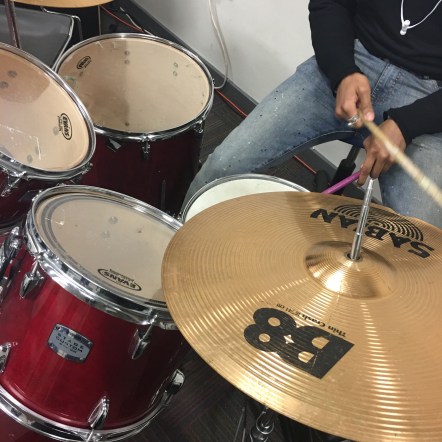
28/1/19 – In today’s rehearsal after tuning the instruments as a collective we decided to go through song from start to end. The group sounded great until we reached the bridge which we had troubles with in the previous rehearsal. I have learnt all the chords for the verses and the choruses but I barely know bridge and I am still getting use to the finger positions for the bridge.
30/1/19 – By today’s rehearsal I knew all the chords to the song including the bridge which my team had trouble with in the early stages but with a few practises we were able to execute it to fullest potential. We kept starting from the beginning of the bridge so the lead guitarist could transition into his solo right after. With many practise runs we were able to get this right as a tight band.
31/1/19 – Now that I know all the chords for “Somebody to Love” I am working on my guitar licks to add more variety to the performance, as a whole the band sound reasonably tight which is the most important part. Occasionally a member in the team will get distracted at first when the instruments are being tuned, this takes away from rehearsal time and although we know the song there are many layers we could add to the performance with that time being wasted.
4/2/19 – Today the group decided to recap on ours progress and what we need to improve on. We worked on our transitions especially from the chorus to the second verse, we believed the group as a whole kept on having issues at that part. We practiced that part many times even when we got it right so we would became accustomed to it so by the next session we should be more confident at that part. I will also do some extra practice so that the group are ready to move on for the next rehearsal.
6/2/19 – Today’s rehearsal ran very fluently because everyone is more satisfied with their growth. To add more to the performance we looked at many stapled musician’s live shows and observed how they made the crowd react and how they used their space to their advantage. After we went through the song multiple times with the vocalists adding slight choreography to enhance the show.
7/2/19 – In today’s session we overlooked the outro because that is where we decided to place the rapper in the group to input his verse and the instrumental sounded great so just repeated this part until the rapper got his verse right. To make the performance a success, by next week we need the outro to work correctly with the rapper.
11/2/19 – Today the group discussed our previous rehearsal and what we were going to do to take this performance further. Throughout last weeks rehearsal I was working on a few guitar licks to advance my performance. I having been working on my barr chord shape and have been getting a better sound than I did last week.
13/2/19 – As we are coming close to our performance, this last few rehearsal have been quick run throughs of the song and getting our stage persona ready for the audience. We know that part of being a great performer is stage presence which includes being in tune with the audience and not looking down at our instrument, so we have been encouraging each other which gives the performance more character. For our next rehearsal we aim to put finishing touches on the stage show and directions.
14/2/19 – During today’s practise we performed the song multiple times from the beginning to end. As a collective everybody knows their parts and transitions completely so the practise was less stressful, so in todays rehearsal we focused on our on stage personas. We looked at various Queen live performances and their chemistry on stage and what they did to make themselves seem larger then life.
25/2/19 – As this was our last rehearsal we were going through the song with new editions to the performance including body language and guitar licks to give the performance more life. Everyone in the group is confident in their parts and are ready to perform to the best of our ability.
Essay
It tends to be exceptionally inconvenient and irritating for the entertainers when there are technical difficulties. It can likewise be exceptionally exasperating to the audience members, for instance when there is continuous feedback it tends to be truly distressing and disturbing. Performers should remain professional throughout even if a problem occurs we must continue with the performance regardless of what happens in light of the fact that we must be proficient and promise the audience members that everything is still alright and whatever the issue is the professionals will attend to it at the earliest opportunity.
Before a band goes on stage to perform, I think it is very important for there to be dialog between the band and live engineers so they can discuss what to expect from the performance what sonic error could occur and how to avoid them and identify hand gestures to code things i.e. two fingers in the air to increase volume of instrument.
As a band, issues can undoubtedly be redirected however just with great communication and hand signals are the most ideal approaches to cooperate with the band. When we feel that something isn’t right or somebody in the collective is off we can give them hand signals and somewhat guiding them to the right direction. Issues occur from numerous live sound positions from the engineer to the band itself and as a group people should all be mindful.
Hand gestures to the engineer could simply improve the sound of a performance instead of having to stop the performance and start again the performer could tell the engineer to turn up or down their instrument without verbal exchange. This builds a healthy dialog between the team which will reflect on the live show.
To prevent live errors I will make sure my instrument is in tune with the rest of the band and make sure my volume is to a reasonable amount so it is not overbearing. I will also make sure all wires are plugged in correctly to avoid any distortion.
It is important for performers to have a live monitor mix on stage, by giving artists their very own speaker to hear and respond to their sound as they perform, later technology advances in this field give different choices for a clear sound. Normally when playing loud music, performers are situated behind the front of house speakers (heard by the gathering of people) to evade feedback, and for the security of their own ears.
During performances it is vital that the engineer is paying attention to the sound and keep all instrument’s volume levelled to a standard mix. This way this keep the performance running smooth and takes care of any errors before the performers or audience take note of it.
Benediktsson, B. (2019). The Ultimate Live Sound Survival Guide. [online] Audio Issues. Available at: https://www.audio-issues.com/live-sound-tips/the-ultimate-live-sound-survival-guide/ [Accessed 20 Jun. 2019].
Making Music Magazine. (2019). Monitor Speakers for Hearing Yourself Onstage | Making Music Magazine. [online] Available at: https://makingmusicmag.com/monitor-speakers-hearing-onstage/ [Accessed 16 Jun. 2019].
https://www.gearslutz.com/board/newbie-audio-engineering-production-question-zone/697144-why-do-musicians-need-monitors-live-sound.html
Sound engineers, barring the screen engineers, are regularly situated in a little segmented off zone front-of-house, encompassed by the gathering of people or at the edge of the group of onlookers region. From this position they have unhampered tuning in and a reasonable perspective on the execution, empowering the task of the primary speaker framework, show control reassures and other hardware. For this situation “front of house” can allude to both the general gathering of people/open region or to the particular little area from where the show is blended.
 Riff
Riff 